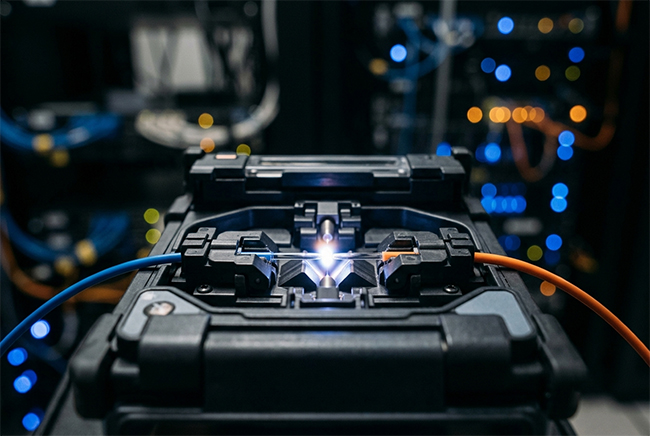
Fiber Optic Splice Closures: Protecting the Connections That Power Our Networks
Fiber optic splice closures are easy to ignore. Until one fails.
Your data travels through glass fibers that span oceans, cross mountains, and run under city streets. Those fibers are amazing—terabytes of information over thousands of miles. But they're also fragile. Moisture, rodents, temperature swings, even dirt can break a connection.
That's where splice closures come in. They're the unglamorous plastic boxes that keep the internet from falling apart.
This guide covers the basics: what splice closures are, the different types, how to pick one, and what actually matters in the field.
The Basics
You splice two fiber cables together—maybe to fix a break, maybe to add a new branch. That spliced spot is now the weakest link in your entire network. The splice closure is just a box that goes around that weak spot. That's it.
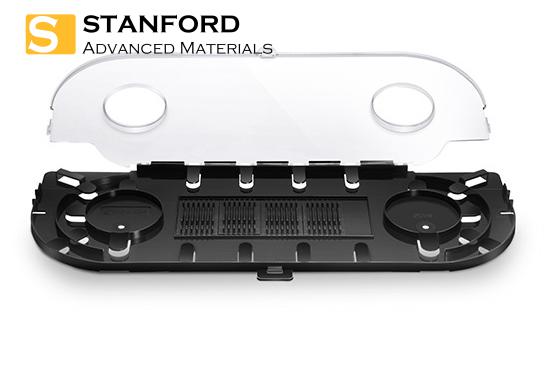
Inside, you'll find splice trays. Think of them as organizers. They hold each splice in place, keep fibers from tangling, and make sure nothing bends too sharply. Some people call these enclosures or joint closures. Same thing.
What Splice Closures Protect Against
Look, fiber is tough until it isn't. Here's what actually kills splices in the real world:
- Water. Number one enemy by far. A wet splice is a dead splice.
- Temperature. From –40°C to +85°C is standard. Beyond that, seals fail.
- Dirt and dust. Even a few specks inside a closure can cause loss.
- Bugs and rodents. Yes, they chew through cable jackets. I've seen it.
- Soil pressure. Bury a closure wrong and the ground will crush it over time.
- UV and vibration. For aerial installs, sun and wind do slow damage.
Most good closures carry an IP68 rating. That means dust-tight and waterproof enough to sit underwater for weeks. Some also have IK10 impact rating—vandal-resistant, basically.
Horizontal vs. Vertical
Horizontal (Inline)
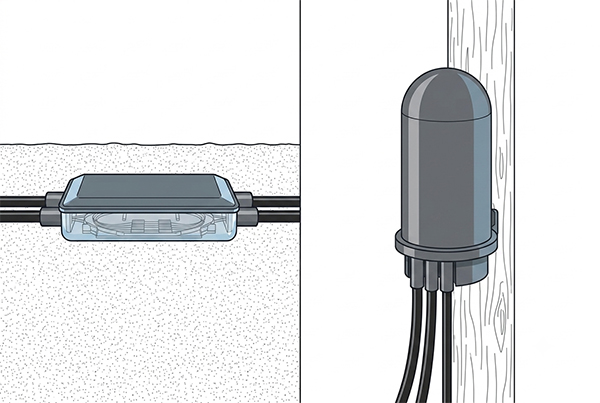
Flat or cylindrical box. Cables go in one end and out the other. Simple.
Where you'll see them: buried underground, in vaults, on poles, inside cabinets. Basically everywhere.
Capacity: Usually 24 to 288 fibers. Bigger ones exist.
Why people like them: They're good at packing a lot of fibers into a tight space.
Vertical (Dome)
Dome-shaped. Cables enter from the bottom only.
Where you'll see them: manholes (especially in flood zones), on poles, on walls. Very common in FTTH.
Capacity: 24 to 576 fibers. Some go to 864.
Why people like them: Fewer places to leak. And the clamp-ring designs open in minutes with no tools.
Quick comparison
| Aspect | Horizontal | Vertical |
|---|---|---|
| Cable entry | Both ends | Bottom only |
| Best for | Buried, vaults, aerial | Manholes, poles, flood areas |
| Capacity | 24–288 fibers | 24–576+ fibers |
| Re-entry speed | Moderate | Fast (clamp ring) |
| Leak points | More | Fewer |
Hybrid designs
Some manufacturers sell closures that work both above and below ground. They use interchangeable rubber grommets to fit different cable sizes. Worth looking at if you do a mix of installs—less inventory to carry around.
Selection Criteria
Cable compatibility
First question: what cable are you actually using? Loose tube? Central tube? Ribbon?
I've seen people show up with the wrong closure for their cable type. It's an expensive mistake. Universal designs with swap-able grommets are your friend here.
Port capacity
How many cables need to go in and out? That's your port count.
One trick: some manufacturers make smaller ports for branch cables. Keeps the box size down. Smart design.
Splice capacity
How many splices can the trays hold? Depends on whether you're doing fusion splices (small) or mechanical splices (bigger).
Here's a rule I use: buy a closure that can handle twice what you need today. Upgrading later is a pain.
Sealing mechanism
This is where people mess up.
Three types:
- Gel seals. You can open and close them multiple times. Good for distribution points.
- Gasket seals. Tough, but rubber dries out after years in the sun.
- Heat-shrink. Permanent. You're not getting back in without destroying it.
Pick based on how often you'll need to open it again. If you don't know, get gel.
Placement and mounting
Aerial? You need messenger wire attachments and wind protection.
Buried? Compression resistance.
In a handhole? Make damn sure the handhole is big enough for the closure plus slack storage.
I've seen handholes so small that technicians had to coil slack cable tighter than the bend radius spec. That's a disaster waiting to happen.
Strength member anchoring
Every fiber cable has strength members—aramid yarn, steel rods, fiberglass. These take the pulling load.
If you don't anchor them properly inside the closure, the cable can pull out over time. That pulls on the splices. Splices break.
Look for a closure with a real clamping mechanism, not just a zip tie.
Bend radius management
Fibers don't like tight bends. Exceed the minimum bend radius and you get signal loss. Permanently.
Good closures have trays with curved guides. Bad closures make you bend fibers at sharp angles to close the lid. Test this before you buy.
Re-entry needs
Ask yourself: will anyone need to open this box again?
-
Feeder points? Probably not. Seal it tight.
-
Distribution points? Yes, constantly. Get re-enterable.
And check what tools you need. Some closures require special tape or glue. Others open with a screwdriver. Choose based on what your techs actually carry.
Installation Tips
A few things I've learned the hard way:
Keep it clean. Dust on a splice is permanent loss. No closure design fixes dirty work.
Don't let beginners do this alone. Fiber splicing is fussy. One inexperienced tech can wreck a closure in ways you won't find until months later.
Respect the bend radius. The manufacturer gives a spec. Follow it. Not close to it. Follow it.
Leave slack. Underground, leave 50 to 100 feet of extra cable at splice points. Future you will be grateful when someone needs to re-enter and re-splice.
Write stuff down. Label the trays. Write down splice counts. Date the installation. The next technician (probably you) will thank you.
Final Thoughts
Splice closures are boring. Nobody gets excited about them. But they're also the difference between a network that runs for 20 years and one that fails every time it rains.
Pick based on where you're installing, how often you'll need to get back in, and what cable you're using. Don't overbuy. Don't underbuy. And for buried installs, spend extra on a good seal.
For projects that need reliable material supply and a wide range of enclosure options, Stanford Optics is worth a look.
References
CommMesh. (2025). What Are Fiber Optic Splice Closures (FOSC)? CommMesh Knowledge Base.
Fosco Connect. (n.d.). Fiber Optic Splice Closure Installation Instruction. Fiber Optics 4 Sale.
Justia Patents. (1997). Central strength member anchor for optical fiber cables. U.S. Patent No. 5,824,961.
Justia Patents. (2007). Re-enterable splice enclosure. U.S. Patent No. 8,063,306.
Micos Telcom. (n.d.). Fiber Optic Closure COYOTE® DTC. Micos Telcom Products.
OFS Optics. (n.d.). Sizing Handholes for Fiber Optic Cables (IP079). OFS Technical Practices.