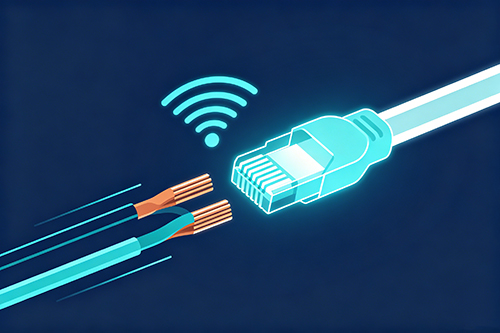
Fusion Splicing or Pre-Terminated Cables: What It Means for Your Fiber Choice
What Is Fusion Splicing?
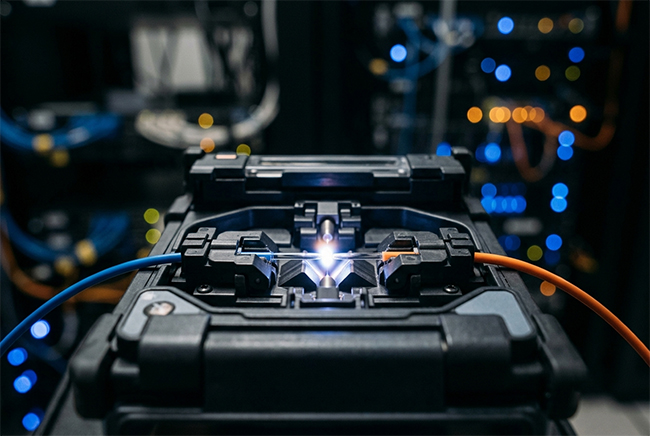
Fusion splicing is the process of permanently joining two optical fibers. After making a precise cut (cleave) on each fiber, a fusion splicer aligns them and uses an electric arc to weld the glass together. For ribbon cables, mass fusion splicers can weld all 12 fibers in a single operation.
If you're deciding between pre-terminated cables and field splicing, this guide walks you through real-world applications, key trade-offs, and — most importantly — what it means for the type of fiber cable you should be using.
When Does Splicing Make Sense?
Fusion splicing offers the lowest signal loss and the least reflection among all fiber joining methods. A well-done splice typically measures under 0.1 dB — compared to connectors (LC, ST, SC) which usually run 0.2 dB or higher.
That difference matters. High-speed networks — especially 40G and 100G — have tighter loss budgets. That's why fusion splicing has become much more common.
Common use cases include:
- Repairing a broken fiber link
- Connecting outside plant fiber (250 µm) to inside plant fiber (900 µm) at building entry points
- Building fiber links inside data centers or LANs
- Situations where cable lengths cannot be precisely determined in advance
- Field termination of MPO connectors
Why Splicing Means You Need Bulk Fiber Cable
Here's the key takeaway for installers and project managers:
Splicing = bulk fiber cable. Pre-terminated = factory-made assemblies.
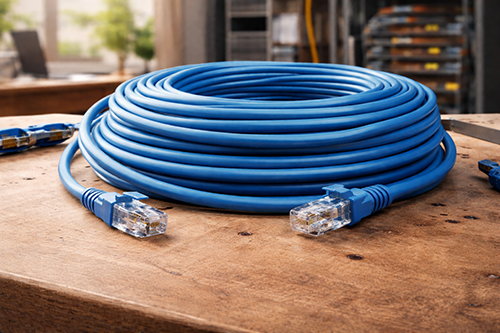
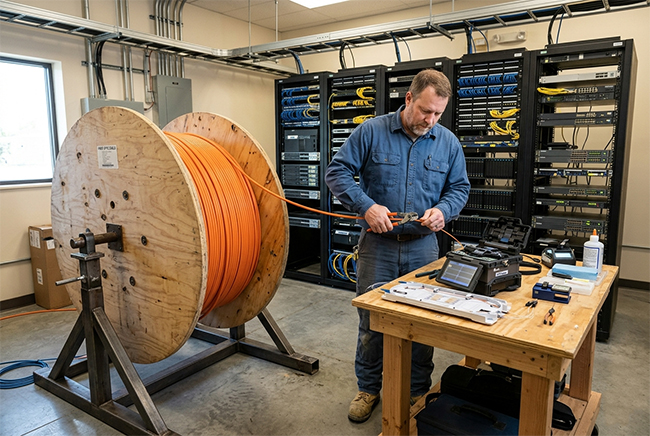
When you choose field splicing, you're not waiting weeks for custom-length pre-terminated cables. You pull the exact length you need from a reel of bulk cable, splice on-site, and move on. No waste. No delays. No "cable too short" disasters.
Bulk loose-tube cables (for outdoor) and tight-buffered cables (for indoor and riser or plenum spaces) are the standard choices for field splicing applications. They give you:
- Flexibility to cut any length on-site
- Lower material cost compared to pre-terminated assemblies
- No lead time waiting for factory terminations
Pre-terminated MPO cables have their place — low loss (0.2 dB), plug-and-play — but they come with trade-offs: longer lead times, higher material cost, and you must know your exact lengths before ordering. Too short means a significant delay. Too long means slack management headaches.
When lead times are unacceptable, or lengths can't be predetermined, field splicing with bulk cable from Stanford Optics is your only practical option.
Splice-On Options: Pigtails vs. Connectors
| Method | How it works | Storage needed |
|---|---|---|
| Splice-on pigtail | Pre-polished connector with a short fiber stub (≤5m). Fuse to the incoming bulk cable. | Splice sleeve + splice tray |
| Splice-on connector | The fusion point is inside the connector body. | No sleeve or tray required |
For MPO field termination — which is often required for high-density data center links — splicing is essentially the only field option. And that means starting with bulk multi-fiber ribbon cable, available from Stanford Optics.
What to Watch Out For
1. Equipment needs
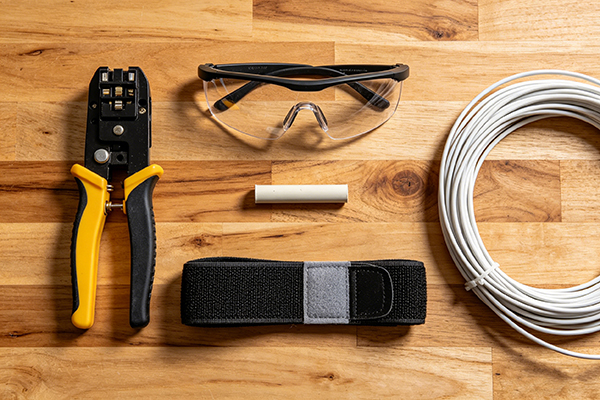
Fusion splicers and high-precision cleavers are required. For frequent or ongoing work, owning a splicer pays for itself quickly. For occasional jobs, rental is an option — but most field teams find that owning one saves time and money within a few projects.
2. Time and workspace
Splicing takes longer than plugging in a pre-terminated cable. But when you factor out lead time and length guessing, it's often faster overall. You'll need a clean, stable workspace.
3. Cable management
When using splice-on pigtails, store splices and slack properly in splice trays. Never exceed the fiber's bend radius.
4. Testing
An OTDR is required to locate splices. For extremely low-loss splices, you may need to lower the OTDR's loss threshold. Bidirectional testing is mandatory for Tier 2 certification — a mismatched splice can show negative loss in one direction and too much loss in the other.
Most modern OTDR platforms offer built‑in tools that simplify bidirectional testing, allowing you to set loss thresholds as low as 0.01 dB.
Bottom Line: Splicing or Not?
| Your situation | Recommended approach | What cable to buy |
|---|---|---|
| Lengths known exactly, plenty of lead time | Pre-terminated | Factory assemblies |
| Lengths uncertain, tight deadline, repair work, MPO field termination | Field splicing | Bulk loose-tube or tight-buffered cable |
If you're doing field splicing, you need reliable bulk fiber cable — cut to length, on your schedule, no waiting.
Stanford Optics offers a full range of bulk fiber cables, including loose-tube outdoor cables, tight-buffered indoor cables, and ribbon cables for mass fusion splicing. All products are tested for low loss and consistent performance in the field.